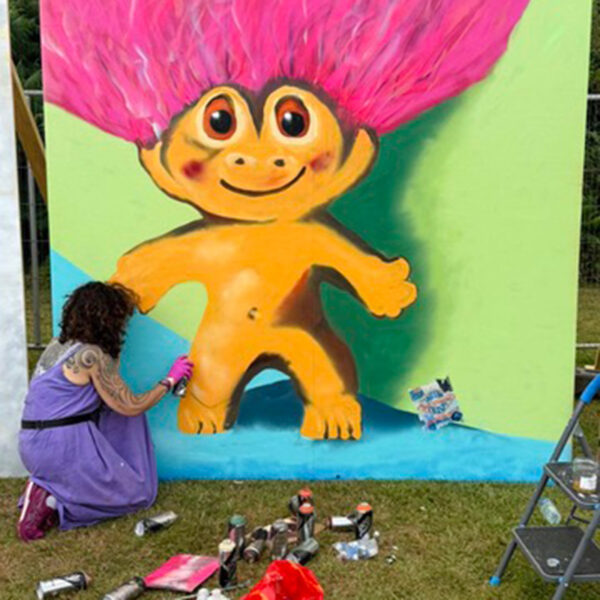
Summer Experiments: Spray Paint, Sketchbooks, and Starting Again
Every summer, after a collection is complete, there comes a natural pause. A breath. A moment between endings and beginnings.
It’s been almost a year since I last wrote a blog.
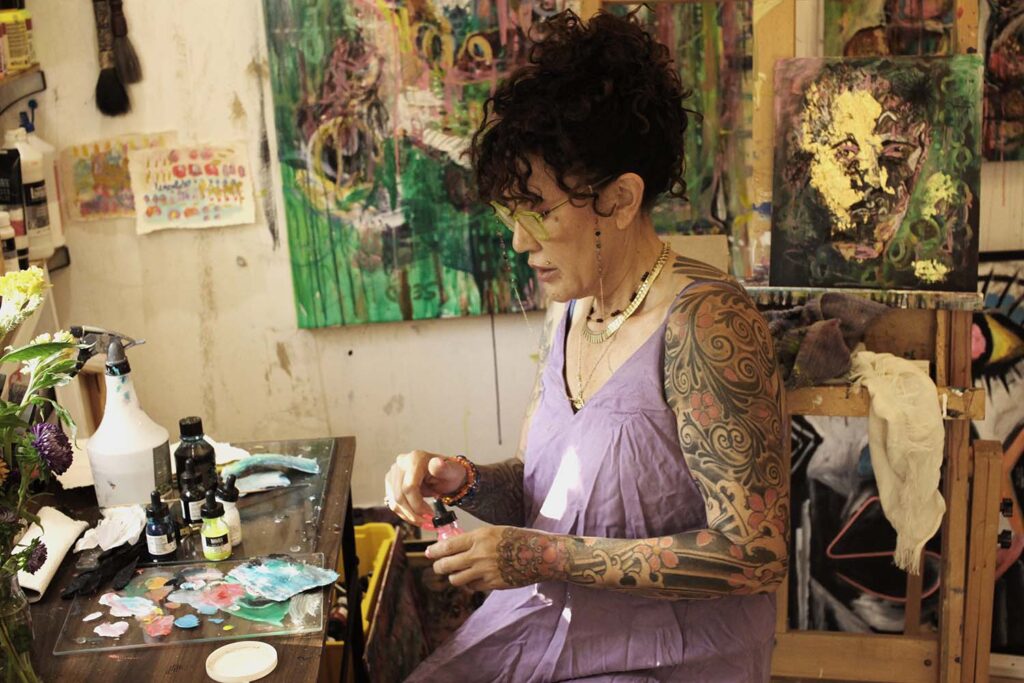
Not because I haven’t been making work — quite the opposite. The past twelve months have been full of exhibitions, live painting, experimenting with spray paint, mentoring creatives, returning to sketchbooks that had sat unopened for years, attending drawing classes to revive muscles I hadn’t used since university, and quietly beginning to think about what comes next. Chichester Creative Art Network has also continued to grow, and I’ve been learning how to balance that alongside my own practice.
Somewhere amongst all of that, I simply forgot to write.
Over the past year, I’ve also noticed a real shift in my practice. I’ve found myself reflecting on how my work has evolved and realising that I’m beginning to understand my artistic language more clearly. For years, I’ve asked myself, what is my style? What is my visual language?
People would often say they could recognise one of my paintings immediately, and I was always surprised. How? I couldn’t see it myself. When I was diagnosed with ADHD in 2024, it came as a huge surprise. As I started to understand it better, one of the biggest revelations wasn’t in my everyday life — it was in my artwork
Suddenly I could see patterns I’d never noticed before.
I would become fascinated by a new material, immerse myself completely, then move on to the next thing.
Resin. Gold leaf. LED. Mixed media. Spray paint. Alcohol ink.
None of those explorations were wasted. I learnt something from every one of them. Each material taught me a different way of making, solving problems and looking at paint.
But I rarely stayed with an idea long enough to discover what might happen if I kept asking the same question.
Looking back through my studio, I realised my practice had become a collection of exciting beginnings.
In many ways, that was a gift. When the hyperfocus kicked in, I would learn everything I could about a material. I would experiment, play and push it as far as I could. It meant that when commissions came in, I had a broad toolkit to draw from and could often approach a brief in ways I wouldn’t have considered otherwise.
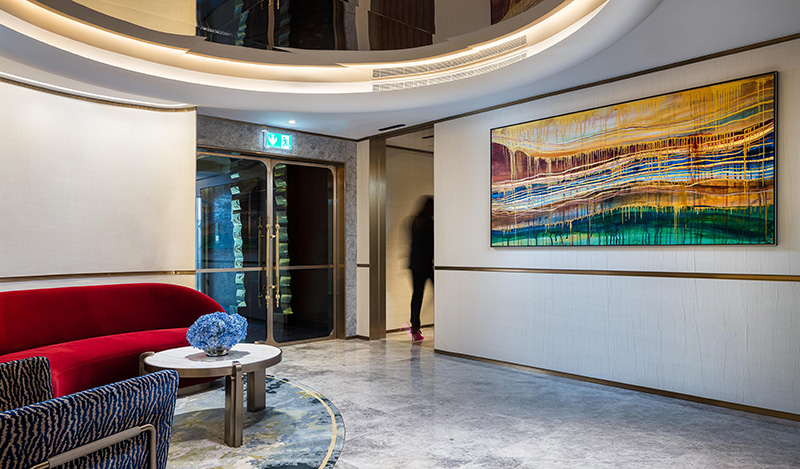
Returning to my own practice wasn’t about becoming an artist again. I had never stopped being one. For over a decade I had been painting almost every day, but in a very different way. For the past fourteen years, I had created artwork for commercial spaces, including many well-known hotels that you may even have stayed in.
Running Ophelia Art Consultancy meant sourcing artwork for hotels, restaurants, private residences and commercial developments. More often than not, I was also invited to create bespoke pieces for specific spaces. Every project began with a brief. There was a client, an interior designer, an architect, a colour palette and a purpose.
I loved that process. I still do. There’s something incredibly satisfying about solving a creative problem and seeing a piece find its place within a carefully designed interior.
Some of my most recognised works came from that period. The Chanel bottles became one of my most commissioned series. The LED Lips followed. Large abstract paintings travelled to luxury hotels across the Middle East. They were beautiful pieces, and I’m incredibly proud of them.
But they weren’t asking my questions.
They were answering somebody else’s.
Looking back, I don’t think I had ever really allowed myself the time to develop a collection. One of the reasons I was so excited to return to the UK after twenty-three years abroad was to concentrate on my own art practice again—to discover what I wanted to say and, ultimately, to rediscover my own voice.
I didn’t return with a grand plan or a clear idea of what my work would become. I simply gave myself permission to stay with an idea for longer than I ever had before. Instead of moving on to the next material or the next commission, I wanted to see what would happen if I kept asking the same question.
The decision to work on my first real collection was a conscious one. It became What We Carry. I wrote more about the making of that collection in my earlier blog, The Art of Uncovering: Painting as a Journey to the True Self, but looking back now, I realise the collection began even before I knew it.
My paintings had already started telling me things long before I was ready to hear them.
One example is Pictures of You, painted in 2022. At the time, I couldn’t have explained what I was working through. Looking back now, I can see that, on some level, I already knew my relationship wasn’t working, even though I wasn’t ready to admit it to myself. Somehow, the painting knew before I did.
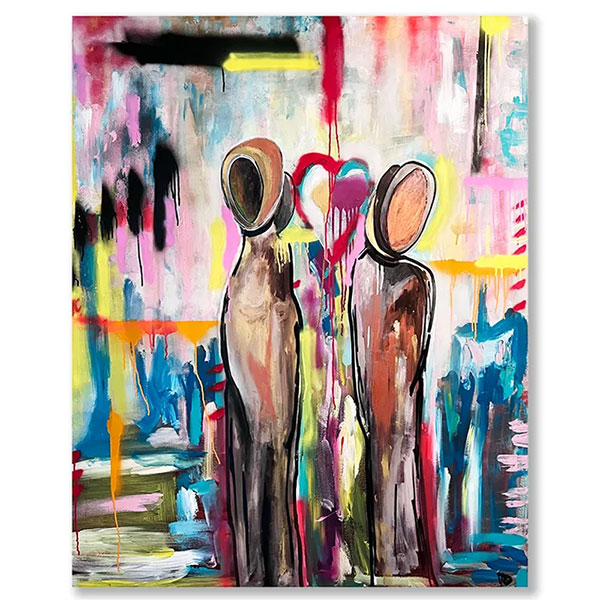
That has happened more than once.
It isn’t that paintings predict the future. They don’t. But they often reveal thoughts and emotions that sit just beneath the surface, long before I’m consciously aware of them. It’s one of the reasons I’ve learned to trust the process. Sometimes the work understands before I do.
With What We Carry, I wanted to see where each painting would lead. I was on my own journey, and every piece revealed something about myself. I worked far more intuitively than I ever had before. I didn’t begin with a subject matter or a fixed outcome; I let the paintings evolve without external influence or pressure.
I didn’t begin with ten paintings in mind. I began with one question. Then another.
Each painting seemed to uncover something I hadn’t recognised before. One painting led to the next, not because I had planned it, but because it left another question unanswered. I realised I wasn’t painting ten separate works. I was having one long conversation with myself.
Individually, they worked.
Together, they made sense.
One painting held an emotion.
Ten paintings revealed a pattern.
Suddenly I could see they weren’t isolated pieces at all. They were all asking variations of the same question.
I lived with those paintings. I’d lean them against the wall, turn them around, hide them, then bring them back out again. Some stayed in the studio for weeks before I knew whether they belonged. Others never found their place. Sometimes a painting has done its job simply by teaching you something that another painting needed.
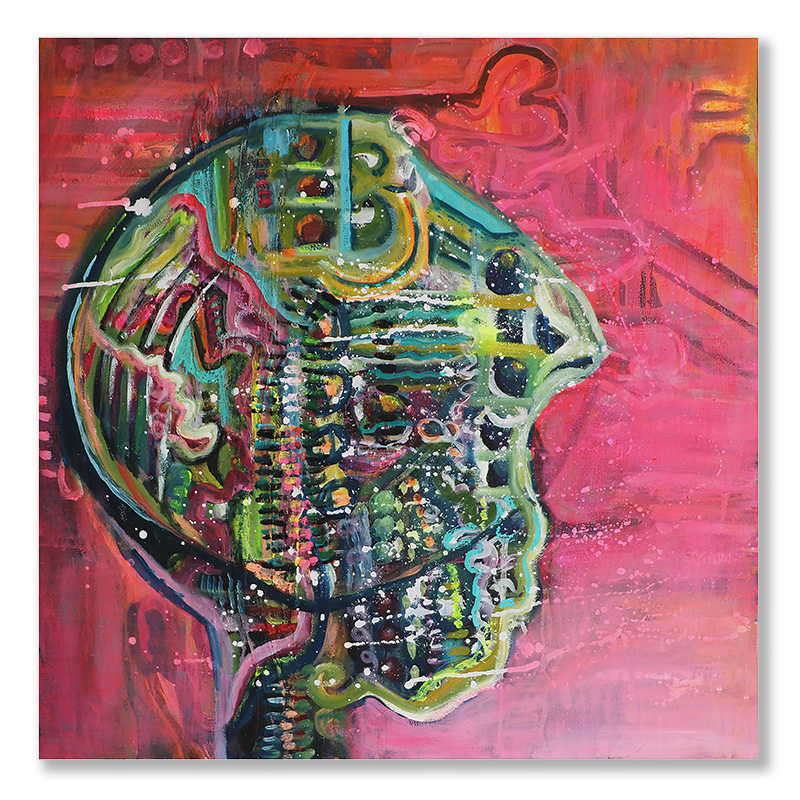
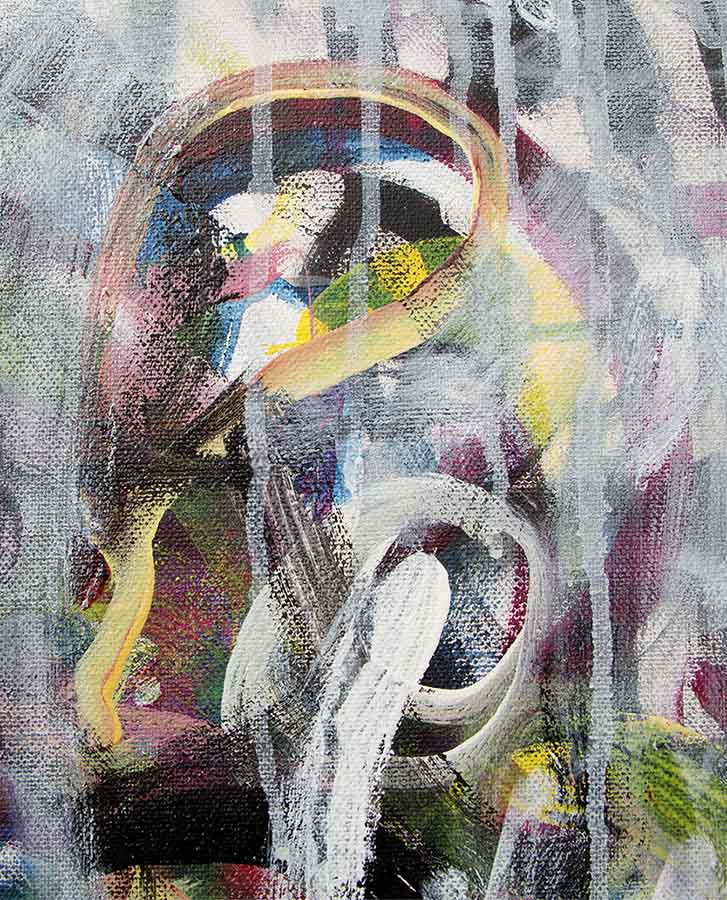
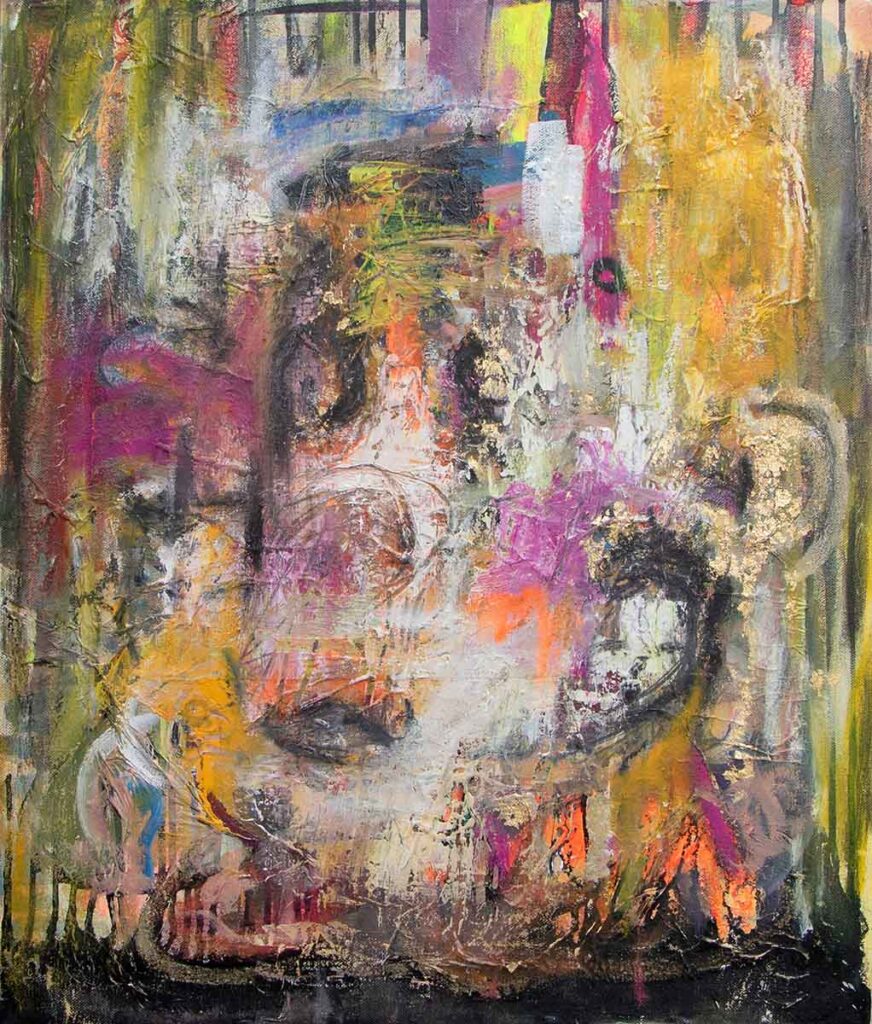
Over the past few years I’ve realised I don’t usually begin with a subject anymore. I begin with a feeling. I ask myself what sits underneath the obvious emotion. Am I really angry, or am I grieving? Is it fear? Is it disappointment? Once I understand the emotional thread, I begin asking how that might exist visually. Not as an illustration, but as colour, movement, repetition, space and mark-making.
Collections aren’t just about producing enough paintings for an exhibition. They are about giving yourself permission to investigate one idea properly. To sit with it. To question it. To try different approaches. To explore without feeling the need to arrive at an answer too quickly.
One painting can’t answer a question.
A collection allows those questions to deepen.
The next collection arrived unexpectedly, carried in on the wings of a magpie. That’s a story for another blog.
What it did do was lead me back to something I had missed for a long time: sketching.
I found myself sketching ideas and compositions, exploring shapes, stories and the essence of what I wanted to communicate before I picked up a brush. Looking back, I can see my work evolving alongside my own life. The collections have become a reflection of where I am emotionally and how I understand the world around me.
Working on the magpie series, I spent far more time thinking about composition than I ever had before. I enjoyed figuring out where the magpie should sit, what it represented and how I could introduce a more obvious narrative while still keeping the movement and energy that had become so important to me during What We Carry.
What surprised me most was how much I enjoyed returning to a more observational way of painting. Creating a realistic interpretation of the magpie reminded me how much I enjoyed drawing and how much I had neglected that part of my practice. It encouraged me to go back to sketching and life drawing, and I realised that some creative muscles simply need exercising again.
I loved the magpie series, and the response to it was incredible.
But I also remember thinking, I don’t want to paint magpies forever.
That realisation became important.
It wasn’t about leaving the collection behind; it was about recognising that each collection should lead naturally into the next.
What I’ve since realised is that I haven’t left the magpies behind at all. They’ve simply changed.
In the earlier paintings they were something to observe. Now they’ve become part of the story itself. They’re no longer simply birds within the composition; they’ve become symbols. Sometimes they represent an emotion. Sometimes they feel like guardians or companions, quietly present within the work. Their role has shifted from being the subject to becoming part of the visual language.
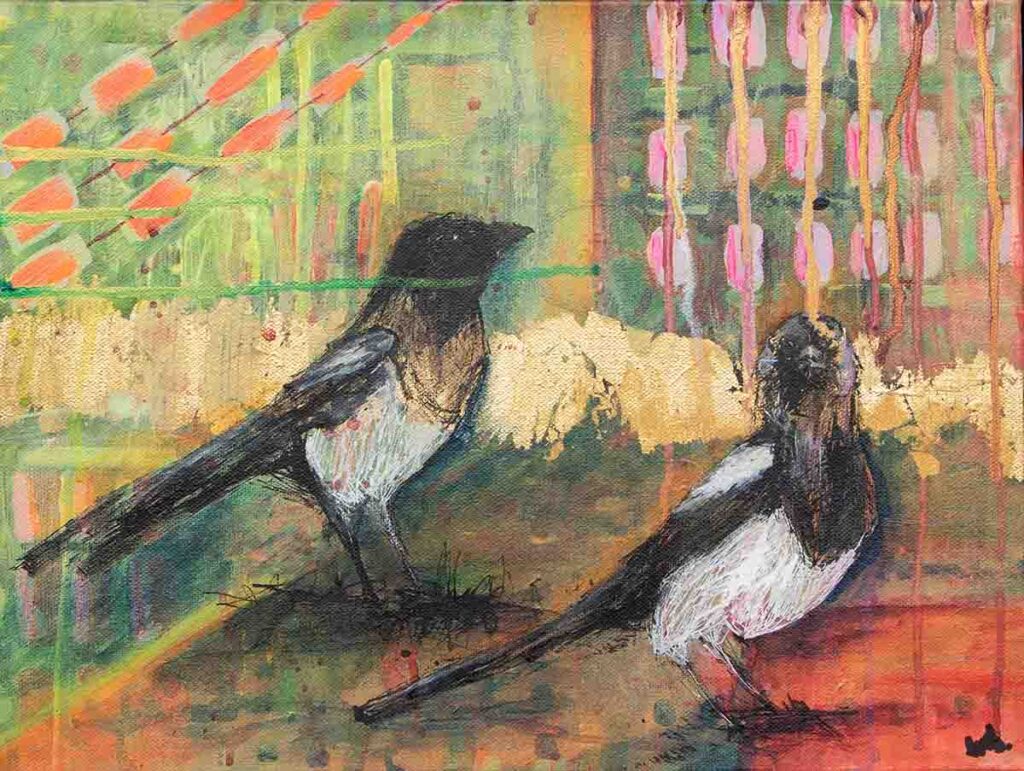
I find that fascinating because it reminds me that ideas rarely disappear completely. They evolve, taking on new meanings as my own practice develops.
It wasn’t about leaving the collection behind; it was about recognising that each collection should lead naturally into the next.
When I began developing In Motion, I wasn’t changing direction—I was refining it. I’ve always painted abstractly, but this time I wanted to strip everything back. I spent a long time setting myself exercises, limiting the number of brushstrokes, reducing my colour palette and exploring how much emotion could be conveyed through shape, movement and mark-making alone.
The sketchbook became central to my process.I pinned sketches to the studio wall and lived with them. Every time I walked past, I’d notice something different. Certain shapes kept repeating. Particular brushstrokes caught my attention. I’d add a note, a line or a flash of colour before walking away again.
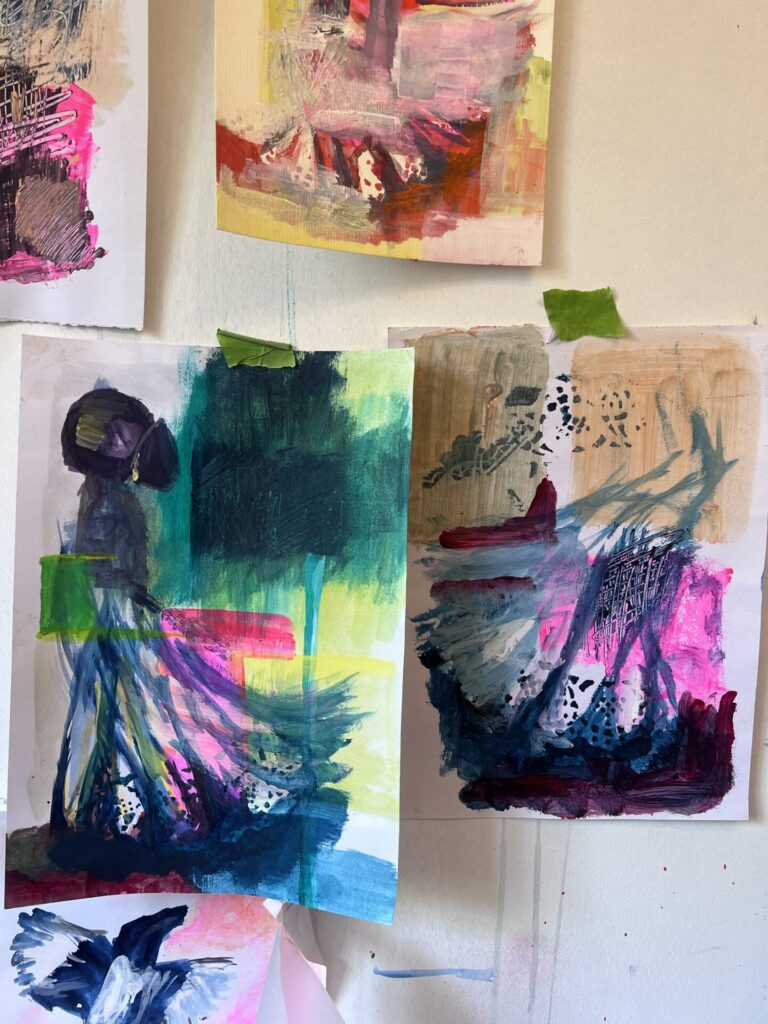
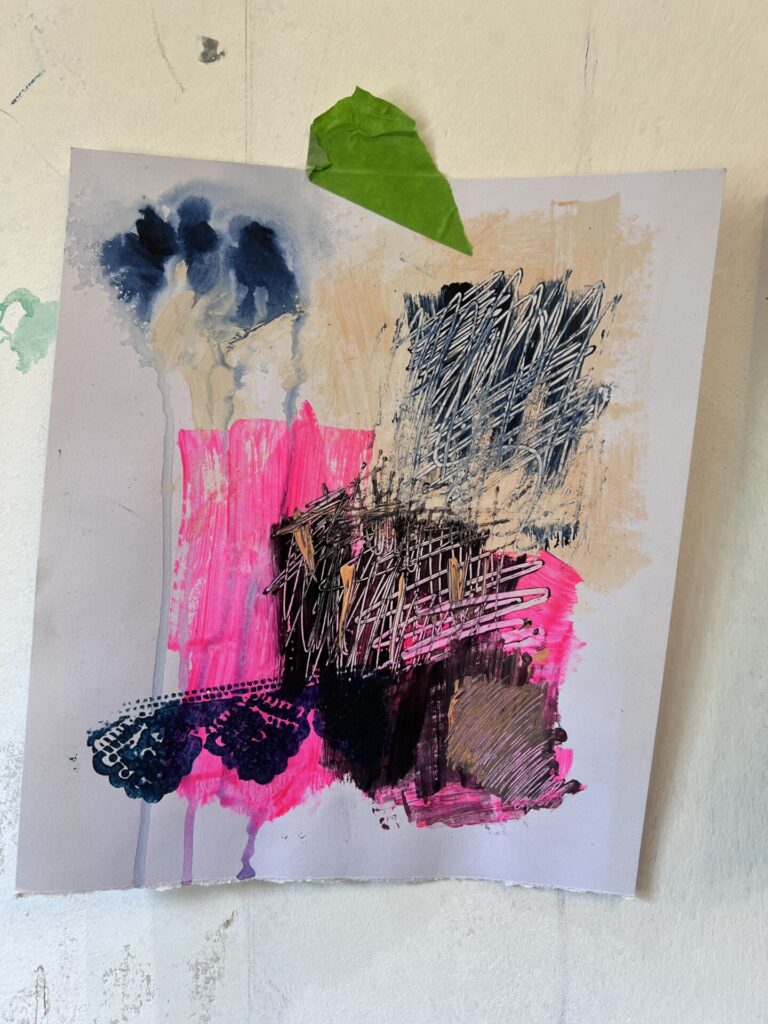
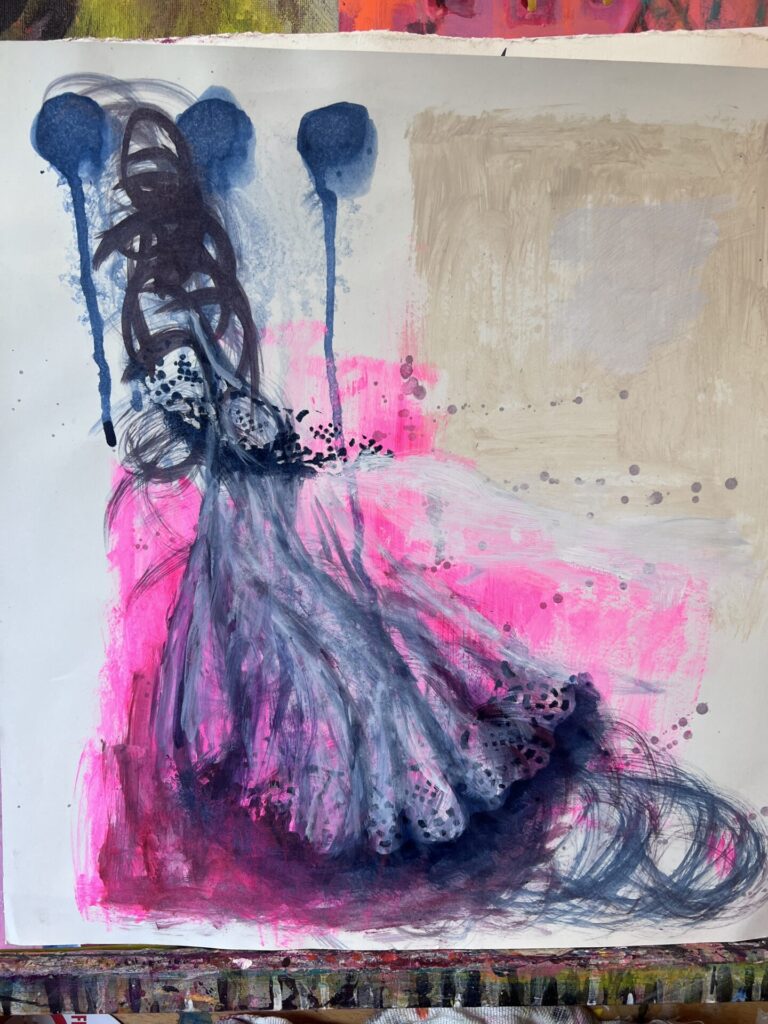
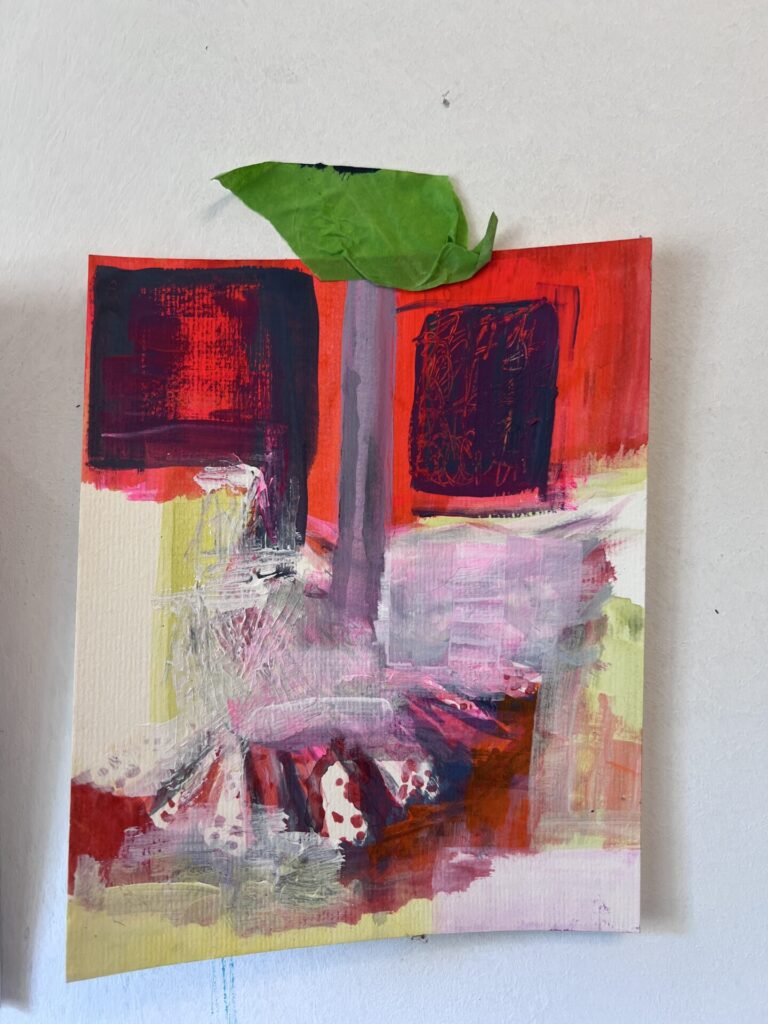
Slowly, the compositions began to emerge.
That’s become one of my favourite parts of the process.
Where I think I’m going and where I eventually arrive are rarely the same place.
I kept coming back to ideas of movement, optimism, awareness and growth, trying to understand how those emotions could exist visually. One phrase kept returning to me throughout the process:
“I need to trust that the painting can hold what I can’t say.“
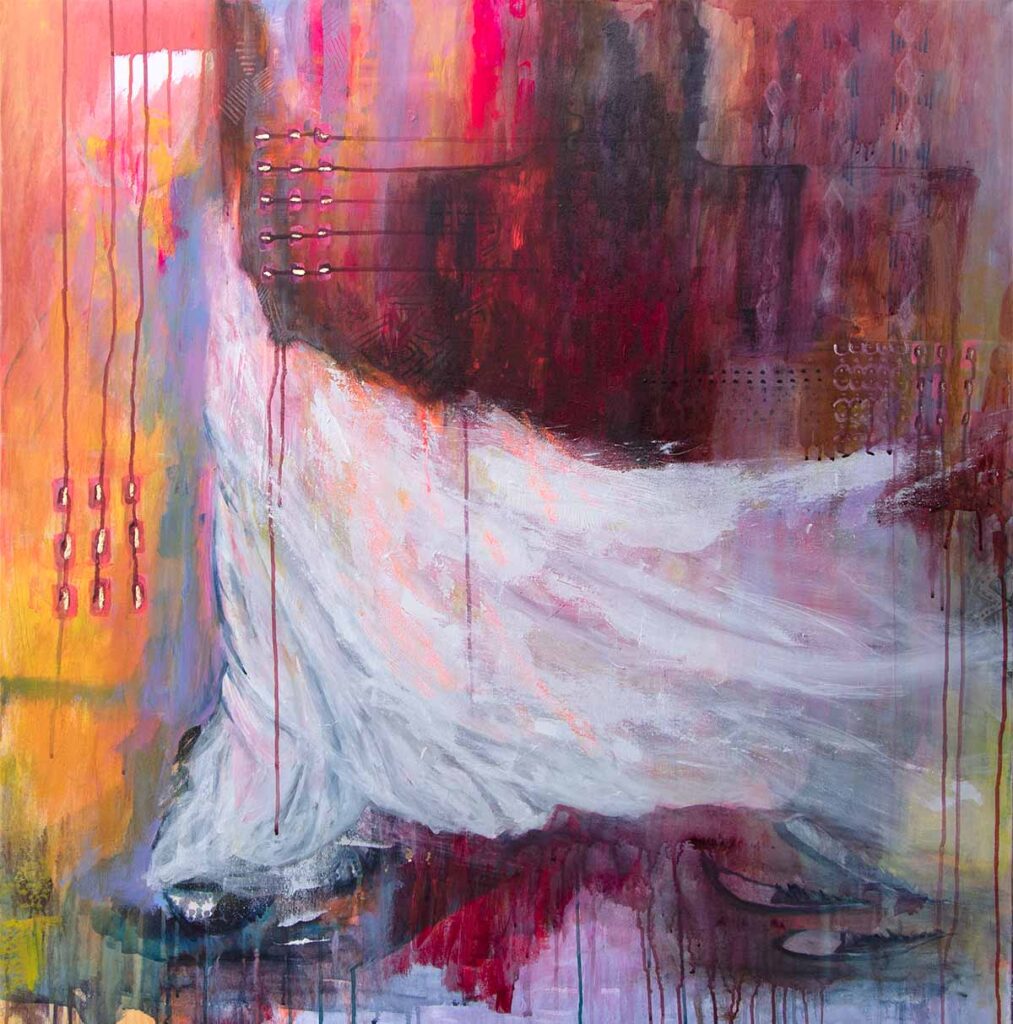
I realised I was enjoying this stage almost as much as the painting itself. Gathering images, sketching, collecting colours, researching and testing ideas had become part of the work, not simply preparation for it. Often, I’d return to pages I’d filled weeks earlier and suddenly see a connection or possibility that I’d completely missed the first time.
I’ve learnt that painting doesn’t begin with the first brushstroke on canvas. It begins much earlier, in the quiet process of observing, collecting, questioning and allowing ideas the time to develop.
For years I thought a collection had a clear beginning and an end.
Now I’m not so sure.
It feels less like finishing one body of work and starting another, and more like one long conversation that keeps evolving.
Certain colours disappear and then return. Symbols change. Questions deepen. Sometimes I answer one, only to discover another waiting underneath.
Looking back over the past few years, I can see that every collection has quietly prepared me for the next.
That’s what excites me most.
I don’t know exactly where this new body of work is going.
But I know enough now to trust that it will tell me, one painting at a time.
Lately, I’ve also found myself returning to books that have sat on my shelves for years and rediscovering my love of African art and artefacts. It feels like another thread that has quietly been waiting for me, and I suspect it will become part of this evolving body of work. Whether this collection has a defined end, I’m no longer sure. It feels more like something that will continue to grow, with new pieces added as new ideas emerge.
To keep my active brain happy, I still work across different projects and materials. I’m still experimenting, playing and following new ideas. Some of those experiments will never be seen by anyone else, and that’s absolutely fine.
The difference now is that I have a place to return to.
These collections have become the core of my visual language.
They allow me to explore, to wander off on creative tangents, but always come back and push an idea a little further. I want my work to keep growing, evolving and challenging me. That’s where I learn the most—by staying with an idea just a little longer than feels comfortable.
For me, every collection is about stretching, experimenting and discovering something new.
It’s about slowing down.
Making play an important part of the process.
Giving ideas the time and space to develop.
Because I’ve realised that’s where the real work happens.
The next few blogs will explore some of these collections in more depth—how growing up in Nigeria continues to shape my visual language, the story behind the magpies, experimenting with spray paint and street art, and the making of individual paintings.
Looking back has reminded me how important it is to write about the work as well as make it.
Every summer, after a collection is complete, there comes a natural pause. A breath. A moment between endings and beginnings.
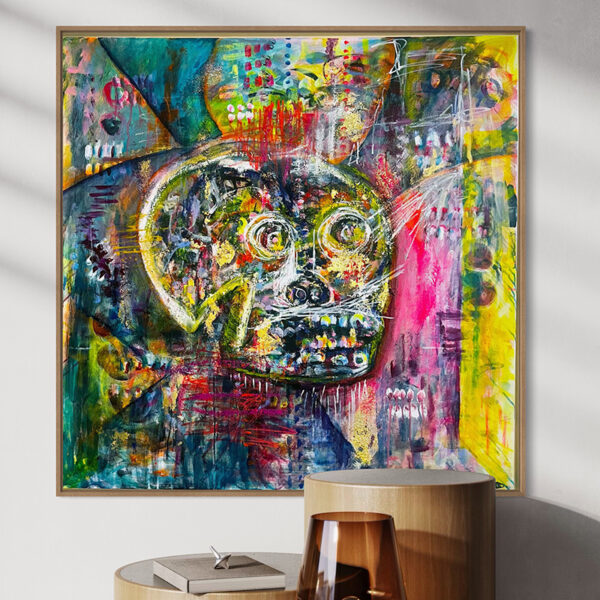
Some paintings arrive in a rush. Others ask more of you. Tough was one of those pieces — layered, loud,